
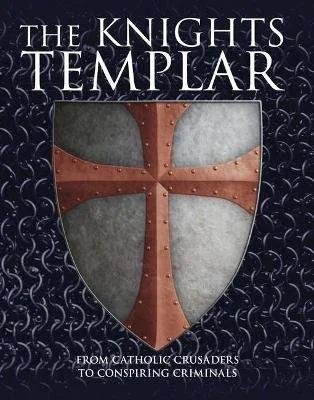
Description
By (author) Kerrigan Michael
Short /annotation
The Knights Templar tells the stories of the major and minor military orders from the 11th century to the present day. Organised chronologically, the book follows the fates of orders, from the foundation of the Knights of St Peter in 1053, exploring how the military and religious aspects of the orders were reconciled, and their impact.
The Templars, the Knights Hospitallers, the Teutonic Knights – the chivalric orders founded during the Crusades evoke romantic images of warrior monks who were fierce but spiritual, chaste and pious yet battle-ready. But what were they really like? How did their organisations form, rise and decline? And how much of what we think about them is myth?
The Knights Templar tells the stories of the major and minor military orders from the 11th century to – in the case of the surviving orders – the present day. Organised chronologically, the book follows the fates of orders, from the foundation of the Knights of St Peter in 1053 to the major crusading era in the Holy Land in the 12th and 13th centuries, from the Teutonic Knights in the Baltic to the Reconquista in Iberia and on to the Hospitallers’ later ventures in the Mediterranean and even in the Caribbean.
Full of surprising details, the book not only explores how the military and religious aspects of the orders were reconciled, but also looks more broadly at the orders’ work, from the Templars’ role in the development of modern banking to hospital, castle and cathedral building, from the Teutonic Knights’ treatment of non-believers to the Hospitallers’ battles against Barbary pirates.
Illustrated with 180 colour and black-&-white photographs, artworks and maps, The Knights Templar is a fascinating history of about some of Europe’s most often misunderstood organisations.
Table of contents
INTRODUCTION
Strange as it might seem, the idea of religious monks fighting as warriors made sense to a medieval Christendom which felt that its frontiers – and faith – were under siege.
CHAPTER 1: THE FIRST KNIGHTS
The first Christian military order was the Knights of St Peter, founded by Pope Leo IX to counter the Normans at the Battle of Civitate in Italy in 1053.
1099: Monastic Hospitallers founded after the First Crusade’s recapture of Jerusalem. Based at a hospice in the city, the role expanded from caring for pilgrims to providing armed support for pilgrims making their way to the Holy Land to becoming a military force. They distinguished themselves at the Siege of Ascalon (1153).
How did one become a member of a chivalric order?
CHAPTER 2: SWORN TO SERVE
1118: Foundation of the Knights Templar, who quickly became a favoured charity in Christendom, receiving money, land, businesses, and noble-born sons from families who were eager to help with the fight in the Holy Land. In 1139, a papal bull from Pope Innocent II exempted the order from obedience to local laws. This ruling meant that the Templars could pass freely through all borders, were not required to pay any taxes, and were exempt from all authority except that of the pope.
CHAPTER 3: HOLY WAR, UNHOLY SHAMBLES
Templars were often the heavily armed, advance shock troops, such as at the Battle of Montgisard (1177), where they helped defeat Saladin’s vastly numerically superior forces. It is estimated that at the order’s peak there were between 15,000 and 20,000 Templars, of whom about a tenth were knights.
CHAPTER 4: MIGHT AND MYSTIQUE
Non-military life – With the immense financial donations and land given to the Templars, they established financial networks across Christendom, bought land, acquired vineyards, and were involved in manufacturing and trade.
Teutonic Knights in Transylvania and Prussia, where they were invited in to subdue pagan Baltic Prussians.

Reviews
There are no reviews yet.